


NEWS
The importance of measuring organic matter in Mexico

The Official Mexican Standards (Normas Oficiales Mexicanas) on the prevention and control of water pollution in Mexico (NOM-001-SEMARNAT-1996 and NOM-002-SEMARNAT-1996) currently require companies to take composite samples of their wastewater according to operating hours and flow, and to send the samples for analysis to a laboratory accredited by the Entidad Mexicana de Acreditación, A. C. These results are used to establish whether companies comply with the environmental standards. The standards regulate the following basic pollutants: temperature, fats and oils, settleable solids, total suspended solids (TSS), biochemical oxygen demand (BOD5), total nitrogen, total phosphorus, pH, faecal coliforms and helminth eggs; they also regulate the pollutant load of urban and industrial discharges according to their content of BOD5 and TSS. As can be seen, Mexico’s official standards have so far not regulated chemical oxygen demand (COD), which reflects both biodegradable and non-biodegradable organic matter in industrial and urban wastewater discharges. Furthermore, this standard allows wastewater to be discharged into receiving water bodies at concentrations of the above parameters that depend on the use of the water body and which, as they apply generally to any point in the country, are independent of the flow, the number of discharges received and the dilution and assimilation capacity of those water bodies.
Chapter XIV of the Federal Duties Law (Ley Federal de Derechos), “Duty for the use or exploitation of national public property as receiving bodies for wastewater discharges”, sets out the measurement and calculation of TSS and COD as the mechanism for calculating the amounts payable per cubic metre discharged into a receiving body; the amount payable for these discharges depends on the type of receiving body and the activity that generated the discharge. The law requires both parameters to be measured, although COD, as it is not regulated, is only measured and reported to set the discharge payment. As a result, in 2016 almost 32% of the monitoring points in CONAGUA’s water quality network in Mexico were considered polluted or heavily polluted based on the COD parameter. All this makes it necessary to update NOM 001 and 002, which should include COD and some other parameters, such as colour, as regulatory elements for industrial and urban wastewater discharges, together with the flow and the assimilation and dilution capacity of the water body, as laid down in the National Waters Law (Ley de Aguas Nacionales), in order to improve the quality of surface water bodies in Mexico.

On 11 March 2022 the new Official Mexican Standard NOM-001-SEMARNAT-2021 was published, setting the permissible pollutant limits for wastewater discharges into national receiving bodies. This new standard adds COD and TOC to measure organic matter instead of BOD5, as well as the parameters colour and toxicity units, and changes some compliance values, such as those for pH, temperature and total suspended solids, in order to improve water quality and protect the ecosystems of receiving bodies in Mexico. The new standard is due to come into force in April 2023.
In addition, laboratory results are obtained hours after sampling at best, and often days or even a week later, which prevents them from being used for immediate decision-making and proper control of processes or treatment plant operation.
Real-time water quality monitoring technology, especially the measurement of organic matter by indirect UV spectrum measurement, gives industry instant results for COD, BOD, total organic carbon (TOC) and dissolved organic carbon (DOC) in the water entering or leaving treatment plants or industrial sites, as well as in the various water treatment and use processes. This makes it possible to correct any process anomaly that could cause uncontrolled or non-compliant discharges, and to measure accurately the water quality and the volumes of wastewater discharged and pay only for them, resulting in considerable savings for companies.
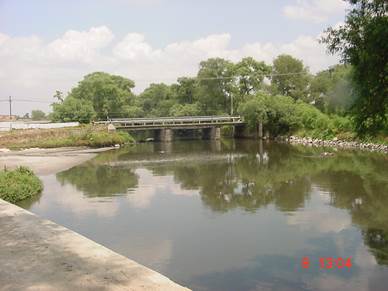
The new portable optical probes can measure in 10 seconds without reagents COD, BOD, TOC, DOC and TSS.
 This eliminates the use of chemical reagents to measure these parameters and gives the result in 10 seconds, enabling instant decisions.
Furthermore, companies that use vials to measure COD must be registered with SEMARNAT as hazardous waste managers, with the resulting burden of managing and recording every vial they purchase, whereas portable COD probes or analysers need no vials.
The official COD method requires a thermoreactor and 2 hours of digestion, plus a spectrophotometer for the measurement. Reagent-free portable COD analysers need no thermoreactor, photometer or spectrophotometer.
They also allow many more measurements than the official method:
Official COD method: 1 measurement every 2 hours per tube.
COD method with portable probe: 720 measurements in 2 hours (one every 10 seconds).
The official method for measuring BOD5 takes 5 days to produce a result, whereas portable BOD probes give the measurement in 10 s.
Total organic carbon (TOC) measurement is limited to very few accredited laboratories. Moreover, as they receive relatively few samples for this parameter, they tend to batch the samples and run the analysis once or twice a month.
With portable total organic carbon analysers you can obtain an on-site measurement in 10 seconds.
There are also benchtop COD, BOD, DOC, TOC and TSS analysers that need no reagents and deliver data in 10 seconds. Their compact size and battery mean they can also be used as portable units.
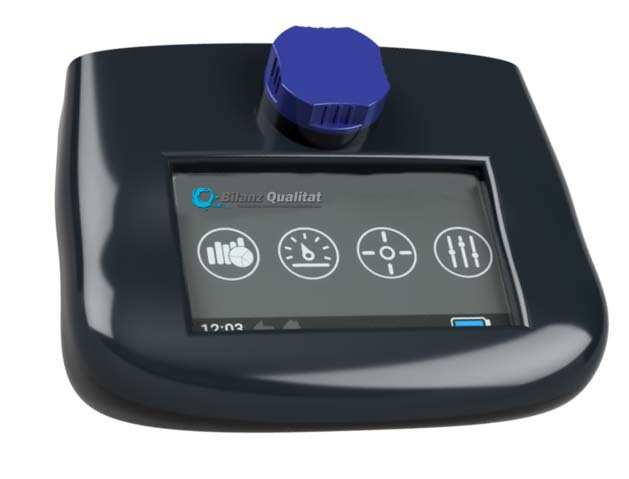
All parameters of the reagent-free portable and benchtop analysers are calibrated with the sample matrix water, using a result traceable to the official method that is entered into the instrument with the calibration curves in no more than 5 minutes.
These instruments make fieldwork much easier thanks to their speed, reliability and compact size.
Their compact size makes them ideal for discharge monitoring, environmental monitoring of water bodies, and urban and industrial wastewater treatment plants.


